
Beverage qualification
Qualify ube powder for lattes before it reaches the menu.
An ube latte photographs beautifully and still fails as a repeatable menu item — the powder settles to the bottom of the cup, the sweetness fights the espresso, the color fades under steam, or the barista cannot make it the same way twice at the morning rush.
Ube Proof qualifies the format for the drink you actually serve: dispersion, settling and hold time, sweetness and flavor balance against milk and coffee, pH behavior, and the outlet workflow that has to repeat every shift.
Beverage behavior is qualified in your named base, equipment, and workflow. A single good cup is not evidence of a repeatable beverage system.
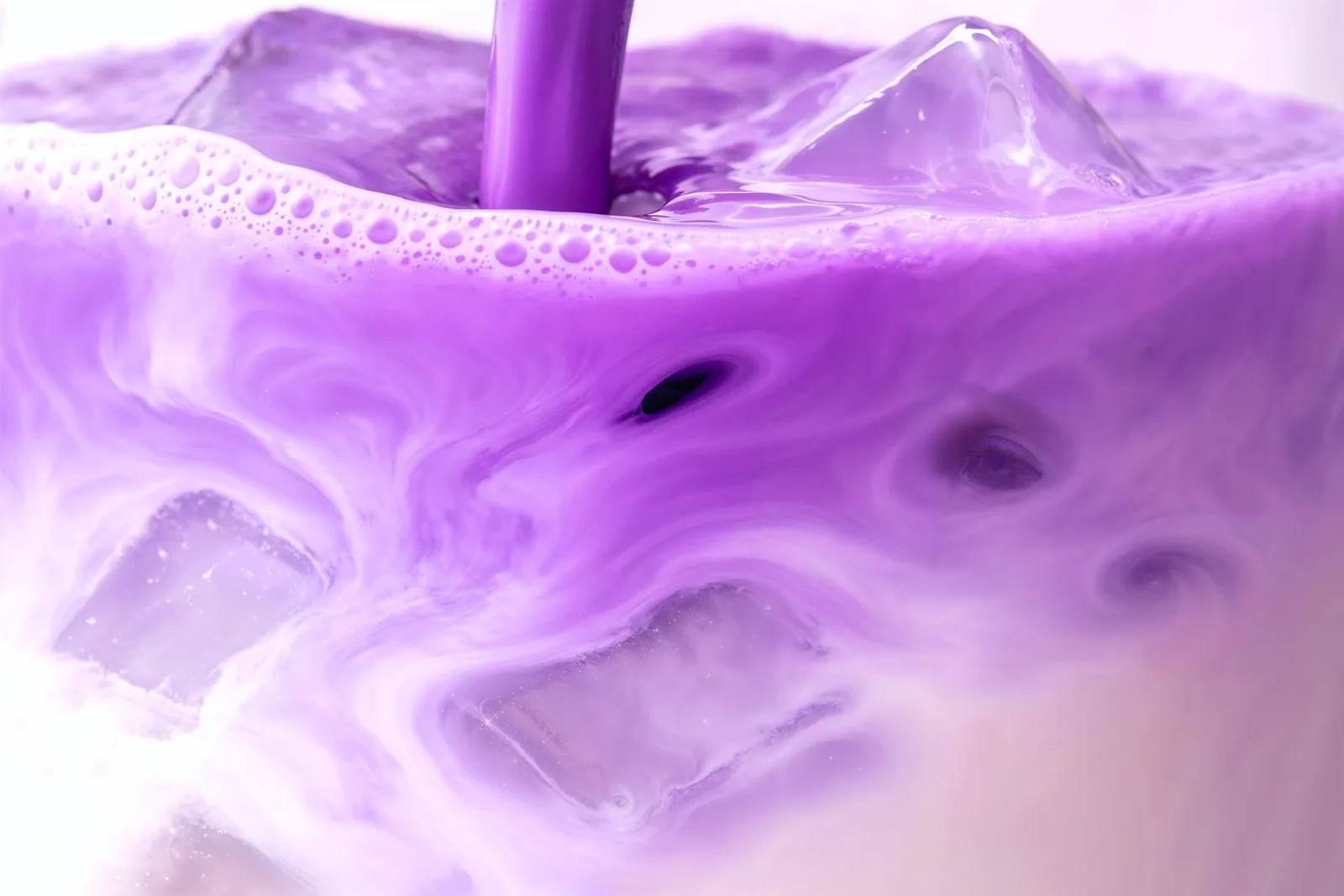
Direct answer: Which ube powder works for lattes?
For a latte program, choose the format by how your bar actually runs: pure ube powder gives full control of flavor, color, and sweetness but needs a dissolving step and a dosing standard; a disclosed premix trades some control for speed and cup-to-cup consistency. Qualify either against dispersion, settling, sweetness, and hold-time targets before it goes on the menu.
What a latte program must answer
A purple drink is not yet a repeatable beverage system.
The questions a latte, milk tea, or iced-drink program has to answer before scale:
- Dispersion — does the powder go into the base cleanly, or leave lumps a barista has to work out?
- Settling and hold time — does the color and body hold from the first pour to the last cup in the batch?
- Sweetness and flavor — does the ube read as ube against milk, espresso, or tea, without over-sweetening?
- Heat and pH — does color or flavor shift under steam, hot water, or an acidic mixer?
- Outlet workflow — can the same drink be made the same way by different staff, at speed, with your equipment?
- Cost per drink — what does the qualified dose cost per served cup, after waste?
Variables to define before testing
- hot, iced, blended, or held service;
- water, dairy, or plant-based base;
- mixing equipment and order of addition;
- target serving size and preparation time;
- temperature, pH, shear, and hold period;
- sweetness and flavor target;
- acceptable settling, residue, or re-stir requirement;
- target cost per drink and sale price context; and
- outlet training and batch-control limits.
Timed beverage check
Record the drink at preparation, after the planned service interval, and at any buyer-required hold point. Note visible settling, clumps, residue, foam or body changes, flavor balance, color, operator steps, waste, and the action needed to restore the drink if applicable.
This method produces an observation for the exact product, recipe, equipment, time, and condition. It does not create a universal solubility or stability claim.
Commercial workflow check
Compare:
- grams used per serving;
- other ingredients and their costs;
- preparation time and training steps;
- waste or remake exposure;
- batch or outlet yield;
- required storage and handling; and
- cost per saleable drink.
Buyer questions
Frequently asked questions
Does ube powder dissolve in cold milk?
Do not make a category-wide promise. Test the exact material, preparation method, equipment, temperature, ratio, and hold time, then describe the observed result precisely.
Why does an ube drink settle?
Composition, particle behavior, hydration, dose, liquid system, temperature, equipment, and time may contribute. A controlled timed test should identify the relevant failure pattern.
Can a café use one premix across every outlet?
Only after the formula, method, equipment, yield, hold behavior, training, label scope, and change controls are approved for that program.
Closing CTA
Define the drink, the hold time, and the operator method.
Fit before scale
Make the next responsible decision.
Define the application, format, destination, benchmark, volume, timing, and evidence that must be true before commitment rises.