
Ube and taro are not interchangeable labels.
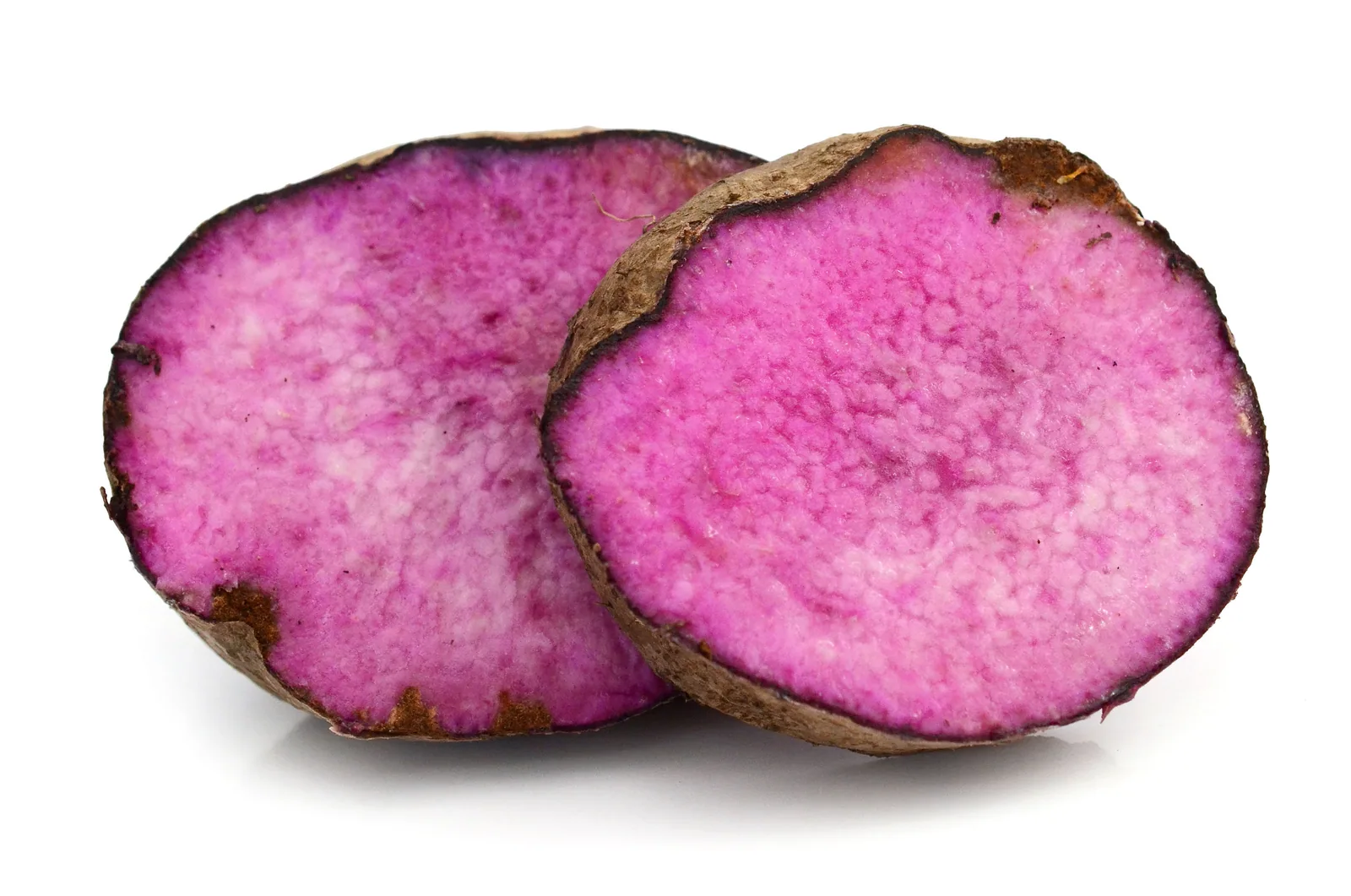
Ube is commonly associated with the accepted species Dioscorea alata. Taro is Colocasia esculenta. Purple sweet potato belongs to Ipomoea batatas. A color, product name, flavor description, or marketing photo cannot authenticate a commercial ingredient or lot.
Source references for taxonomy: Kew Plants of the World Online for Dioscorea alata, Colocasia esculenta, and Ipomoea batatas.
What a commercial buyer should verify
- Accepted common and botanical identity.
- Complete ingredient declaration.
- Crop origin and processing location as separate fields.
- Product and lot linkage.
- Source and method behind any identity claim.
- Whether flavor, color, carrier, or other components alter the product description.
- Destination label and claim responsibilities.
What taxonomy does not prove
A botanical reference defines a taxon. It does not authenticate the product in a bag, prove Philippine origin, establish purity, confirm a facility, or approve a lot. Those questions require product-specific evidence.
Direct answer: How is the taste different from taro?
Ube is generally the sweeter of the two: mildly sweet and nutty, often described with vanilla-like notes. Taro is starchier and more neutral — closer to a mild, slightly nutty potato — and usually needs added sugar to play the dessert role ube plays on its own. In a blind spoon test at equal dose, the ube sample should read sweeter and more aromatic; if it does not, question the sample's ube content before questioning the recipe.
Buyer questions
Frequently asked questions
Can visual color distinguish ube from taro?
No. Appearance alone is not a reliable commercial identity method.
Is purple sweet potato another name for ube?
No. They are different botanical groups, even though marketing and retail labels sometimes blur them.
What should the buyer do if the documents conflict?
Hold the claim and the commercial decision. Ask the accountable supplier to resolve the identity, composition, and lot record before testing or publication.
Fit before scale
Make the next responsible decision.
Define the application, format, destination, benchmark, volume, timing, and evidence that must be true before commitment rises.