
For bakery and pastry teams
Bake the proof into the actual recipe.
Ube powder should be assessed inside the exact cake, bread, cookie, cream, filling, or pastry system. Hydration, heat, flavor, color, texture, yield, and finished-item cost can change by matrix and process.
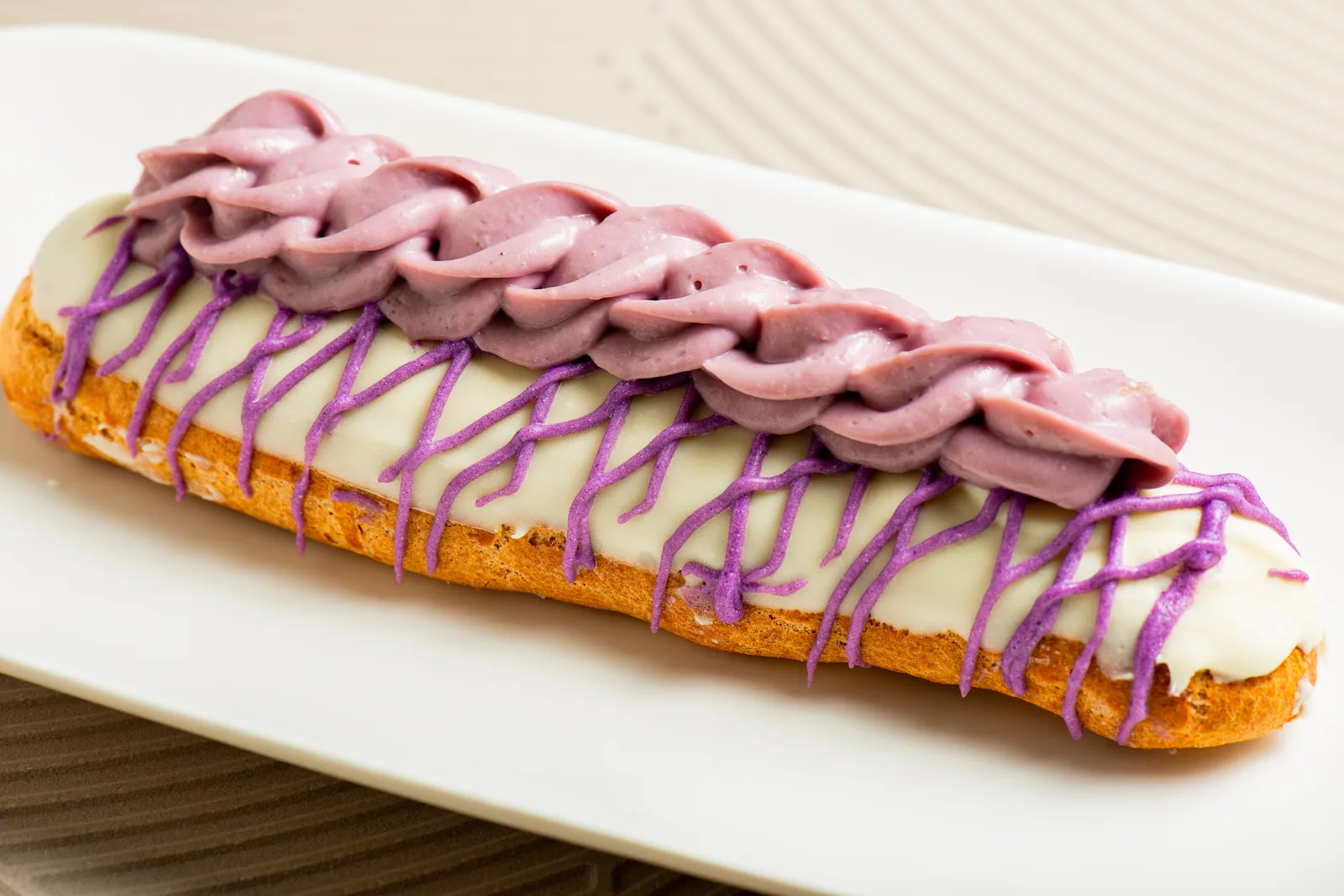
Direct answer: How should a bakery evaluate ube powder?
Start with the complete composition and a controlled base recipe. Compare a defined dose range against the current benchmark. Record added liquid, mixing order, process conditions, finished weight, texture, flavor, color, yield, and cost per saleable item. Approve only the result supported by that test.
Separate the bakery matrices
Cakes and quick breads Review hydration, batter viscosity, rise, crumb, flavor, color, and yield.
Yeast breads and rolls Review dough absorption, mixing, fermentation, handling, proofing, bake response, crumb, and flavor.
Creams and fillings Review dispersion, smoothness, flavor balance, color, viscosity, hold, and filling yield.
Cookies and laminated products Review dough or fat-phase interaction, spread, handling, bake response, texture, color, and saleable yield.
Do not extend evidence from one matrix to another without a relevant test.
Minimum bakery test method
- Name the base formula and batch size.
- Identify the powder or premix and lot or sample reference.
- State complete composition and preparation method.
- Define dose levels and liquid or solids adjustments.
- Hold mixing, resting, fermentation, shaping, proofing, baking, and cooling conditions constant where relevant.
- Record process observations and saleable yield.
- Evaluate flavor, color, texture, and appearance at agreed time points.
- Compare finished-item cost, not only powder price.
- State what passed, what failed, and what remains untested.
What the page should eventually show
Publish only real, dated application cards. Each card should contain the product and lot, recipe basis, dose, method, process conditions, result, limitation, reviewer, image classification, and next test. Do not publish decorative success claims before the evidence exists.
Buyer questions
Frequently asked questions
How much ube powder should a bakery use?
A universal dose would be misleading. The starting range depends on the product composition, desired result, base formula, hydration, process, and cost target. Use a controlled dose ladder.
Does ube powder keep the same color after baking?
The result must be observed in the exact formula and process. Ingredients, pH, temperature, time, and the powder itself may affect the visible result.
Should a bakery use pure powder or premix?
Choose pure powder when formula control is the priority and the team can manage the formulation work. Choose a disclosed premix when a defined workflow and operator repeatability are more important.
Closing CTA
Bring one matrix and one measurable result.
Fit before scale
Make the next responsible decision.
Define the application, format, destination, benchmark, volume, timing, and evidence that must be true before commitment rises.