
For frozen-dessert teams
Qualify ube in the frozen system, not in isolation.
A candidate ube ingredient should be tested in the actual base, process, freeze cycle, and serving condition. The decision must account for dispersion, solids, flavor, color, texture, freezing behavior, yield, and cost per serving.
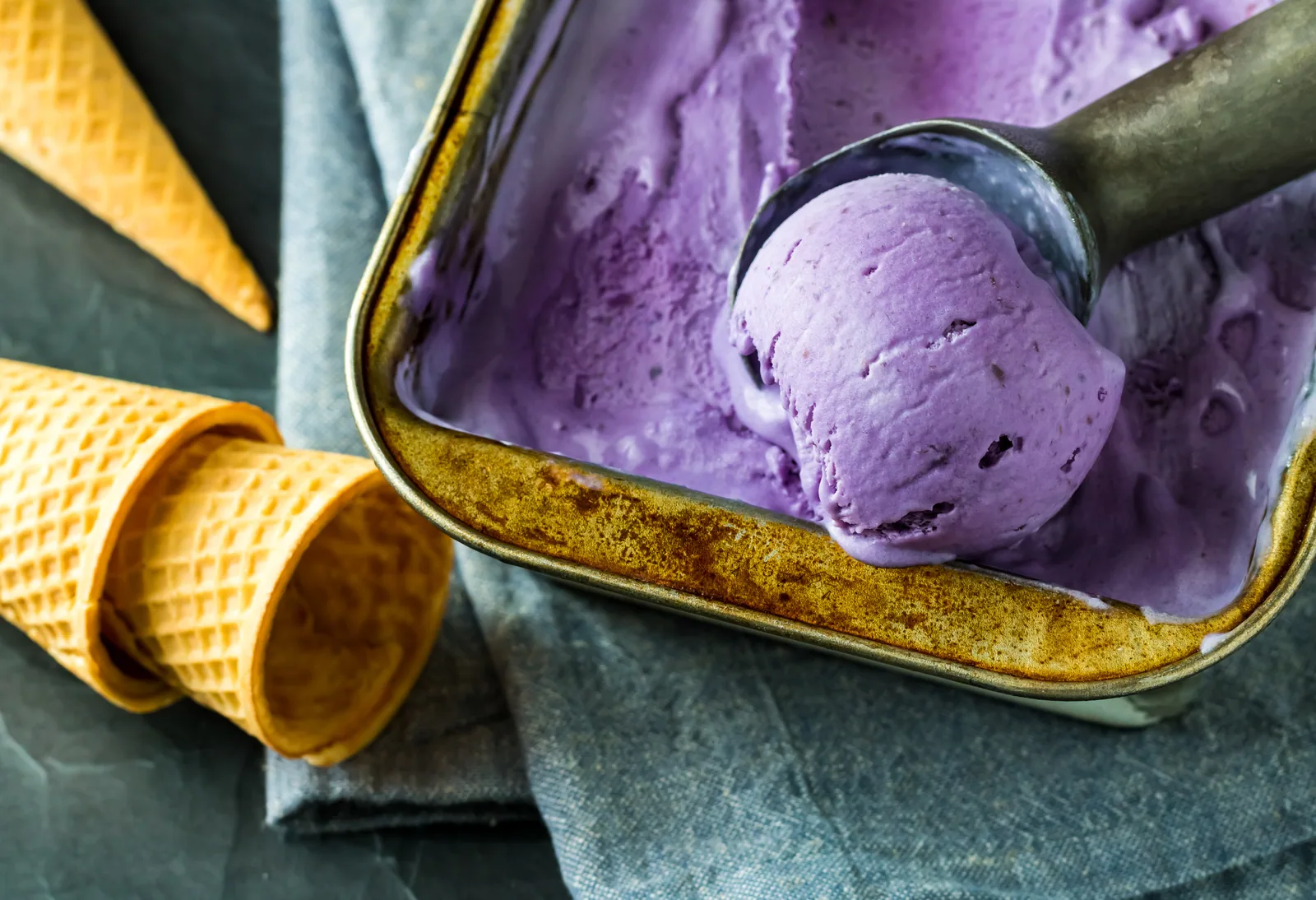
Direct answer: Which ube format is best for ice cream or gelato?
There is no universal best format. Pure powder may provide more formula control. A premix may simplify preparation. Puree, halaya, extract, or a paired system may solve a different job. The strongest choice is the format that meets the agreed result in the buyer's own base and process at an acceptable finished-serving cost.
What can go wrong?
- Dry particles remain visible or feel gritty.
- Added solids change body, hardness, or overrun.
- Flavor weakens or becomes unbalanced at the required dose.
- Color changes through the process or storage period.
- The product looks acceptable at draw but not at the target serving temperature.
- The dose needed for the result makes the serving uneconomic.
- The production lot does not match the approved sample.
These are test questions, not claims that every ube powder will create each problem.
Minimum test brief
Record:
- product and lot or sample reference;
- complete frozen-dessert base and batch size;
- ube format, dose range, and order of addition;
- mixing, hydration, pasteurization, aging, freezing, and hardening conditions where applicable;
- comparison control or current benchmark;
- draw and serving temperatures;
- time points for observation;
- sensory, texture, color, yield, and process observations;
- acceptance criteria and decision owner; and
- finished-serving cost under named assumptions.
Evidence output
Pilot gate
Move to a paid pilot only when:
- the format and composition are acceptable;
- the controlled result meets the agreed criteria;
- the relevant current documents are reviewed;
- the sample-to-commercial-lot path is defined;
- delivered economics pass the approved threshold; and
- responsibilities, lead time, change control, and continuity are clear enough for the next commitment.
Buyer questions
Frequently asked questions
Why can ube ice cream feel gritty?
Particle size, hydration, dispersion, dose, the base, process, and serving condition can all matter. The responsible answer requires a controlled comparison with the exact product and method.
Can ube powder replace flavor, color, or puree by itself?
Do not assume so. Each component performs a different job. The required system should be decided against the target flavor, color, solids, texture, label, process, and cost.
What should we approve before scaling?
Approve the exact format and composition, application result, sample and lot link, evidence set, delivered economics, responsibilities, and reorder control.
Closing CTA
Define the base, process, serving condition, and pass line.
Fit before scale
Make the next responsible decision.
Define the application, format, destination, benchmark, volume, timing, and evidence that must be true before commitment rises.